
Genre-Shift
Prophecy, Proverb, and Epistle as Narrative

What if someone mined a single book of the Bible for all its imagery and insights, and then wove those gems into a story?
Recently, I attempted to do something similar in a sermon…
Who can stand before His indignation?
Who can endure the burning of His anger?
His wrath gushes forth like fire,
And the rocks are broken up by Him.
—Nahum 1:6
Imagine you live in Jericho. The army of the one true and living God is coming for your city—for utter destruction. But it is also coming for you to spare and save according to a solemn vow made before the LORD. For you are Rahab. You know the LORD because the LORD knows you.
And so, when the walls of the city crash like an avalanche of thunder, your home (built into those walls) alone remains. As the soldiers flood the streets without mercy, at God’s instruction, none attack the lone tower that still stands, decorated with a scarlet cord, where you and your family have taken passover-like refuge, because you are shielded and known by covenant.
Instead, the spies alone, who know you, gather you and your family away to a safe place before the city is razed to the ground with fire.
(Can you imagine it?)
As you gaze back at the city, it looks as if lava has overrun it. The whole of it is erased from history, but for you and your family, who escape unharmed. More than that, who are grafted in to the very fold of God to belong there, safe forever.
For…
The Lord is good,
A stronghold in the day of trouble,
And He knows those who take refuge in Him.
—Nahum 1:7
The story of Rahab puts the truths of Nahum 1:6–7 on display in a narrative. It enfleshes this prophet pronouncement of God’s character.
A book that does this same sort of thing well is Wise Words by Peter J. Leithart, each chapter unpacking a single proverb with a fairy tale.
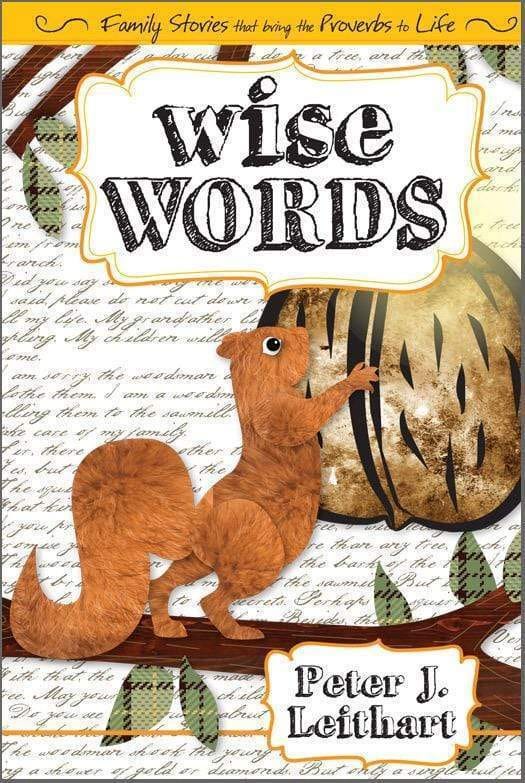
Later chapters in the book go further, weaving in imagery and redemptive pictures from elsewhere in the Scriptures even as the lesson of a proverb is told via story. It is an absolutely delightful book that has served as foundational inspiration for the vision behind my writing.
That vision: To hunt down, unpack, squeeze out, and otherwise examine under microscope as much as I can from a single book of the Bible—its metaphors, exhortations, phraseology, assumptions, points of emphasis, conclusions, style, protagonists, antagonists, lessons, distinctive characteristics, and even its ending—in order to write an adventure story that draws from these discoveries.
So, for example, what if the book of James could somehow be transformed into a fantastical story while maintaining the same heartbeat and same truths? Is that even possible?
It is my intention to find out.